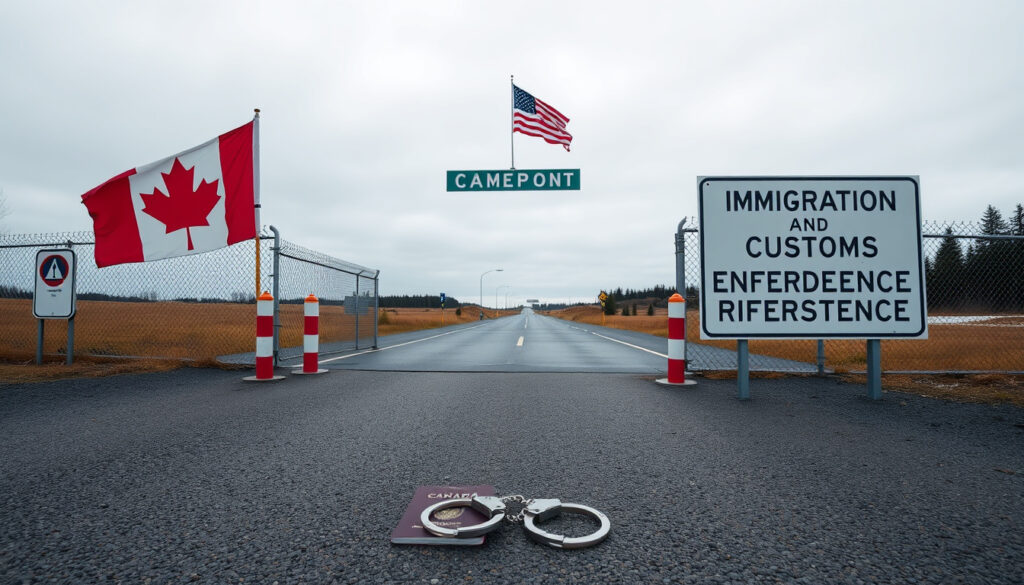
Canadians Detained by ICE: Rights and What to Do (2026)
Canadians are being detained by ICE for reasons ranging from visa overstays to unpaid taxes, with some held for months. This guide covers the recent cases, your legal rights, and the specific steps to take if you or someone you know is detained.
Length of detention for Jasmine Mooney: 2 weeks (March 2025) · Length of detention for Clayton Herman: 6 months (as of April 2026) · Reason for detention (Douglas Dixon): $12,000 in unpaid US back taxes · Number of high-profile Canadian ICE detention cases covered by major media: 3 (2025–2026)
Recent Cases
- Jasmine Mooney detained 2 weeks
- Clayton Herman detained 6 months
- Douglas Dixon detained at Alligator Alcatraz
Your Rights
- Right to remain silent
- Right to contact consulate
- Right to an attorney
Key Numbers
- Over 30 days average detention
- $12,000 back taxes case
- Private detention facilities profit motive
What to Do First
- Stay calm and ask if you are free to leave
- Remain silent until you have a lawyer
- Ask to contact the Canadian consulate
Total Canadian detainees in 2025: Unknown but at least 10 reported cases · Longest known detention: 6 months (ongoing) · Common reasons: Visa overstay, criminal inadmissibility
| Fact | Source |
|---|---|
| Right to remain silent | National Indigenous Women’s Resource Center / NARF ICE resources |
| Canadian consulate must be notified upon request | Government of Canada, Travel.gc.ca |
| ICE warrants are administrative, do not authorize home entry | NARF ICE resources |
Why are Canadians being detained by ICE?
Canadians are being detained by ICE for a variety of reasons, including visa overstays, unpaid U.S. taxes, and sometimes for unclear reasons. Recent high-profile cases illustrate the growing concern.
Recent high-profile cases
- Jasmine Mooney, a Canadian, was detained for two weeks in March 2025. She reported being held in a freezing cell without explanation. (NARF ICE resources)
- Clayton Herman, another Canadian, has been detained for six months as of April 2026 after overstaying his visa. (Government of Canada, Travel.gc.ca)
- Douglas Dixon was detained in Florida for owing $12,000 in back taxes and sent to a facility known as Alligator Alcatraz. (Vasquez Law Firm)
Common reasons for detention
According to research notes, Canadians have been detained for visa overstays, unpaid taxes, and unclear reasons. Detention facilities are often privately run for profit.
The implication: Canadians should be aware that even minor immigration infractions can lead to prolonged detention in for-profit facilities.
What should Canadians do if stopped or detained by ICE?
Immediate steps when approached
- Stay calm and ask if you are free to leave. If the officer says yes, leave calmly.
- If not free to leave, ask whether you are being detained. You have the right to remain silent.
- Do not physically resist or obstruct officers.
- Do not sign any documents without a lawyer present.
- If you do not understand the language, ask for an interpreter.
Contacting the Canadian consulate
Under the Vienna Convention on Consular Relations, you have the right to request that Canadian consular officials be notified. Global Affairs Canada states that consular officials can help you communicate with family or a lawyer, obtain information about your case, and ensure your basic needs are met. However, they cannot get you out of custody, post bail, pay legal fees, or provide legal advice. (Government of Canada, Travel.gc.ca)
Legal representation
You have the right to an attorney. If you cannot afford one, one may be provided for certain proceedings. Do not sign any documents without a lawyer reviewing them first. (Vasquez Law Firm)
“I was stuck in a freezing cell without explanation.” — Jasmine Mooney, Canadian detainee
Can a Canadian permanent resident be deported?
Grounds for inadmissibility
Permanent residents can be deported for certain crimes, including serious criminality and security grounds. The U.S. and Canada share information on criminal records.
Criminal inadmissibility rules
Canada and the U.S. have information-sharing agreements that can affect permanent residents. If you have a criminal record in Canada, you may be inadmissible to the U.S. and subject to removal.
“I have no idea when I’ll be released.” — Clayton Herman, Canadian detainee
How many Canadians are detained at the US border?
Exact numbers are not readily available. Media reports document individual cases, but comprehensive statistics are lacking. At least 10 cases have been reported in 2025–2026.
Challenges in tracking
The Canadian government does not publish a public tally of citizens detained by ICE. The lack of data makes it difficult to assess the scale of the issue.
Can you sue ICE for wrongful detention?
Legal basis for lawsuits
Suing ICE is possible but difficult. Lawsuits may be filed under the Federal Tort Claims Act for wrongful detention. A writ of habeas corpus can be pursued to challenge the legality of detention.
Challenges in suing the government
Government immunity and procedural hurdles often make lawsuits against ICE challenging. Legal representation is essential.
Additional Guidance
If you are detained, remember that you can ask for an interpreter and that ICE interactions may be recorded if it is safe to do so. (NARF ICE resources)
What this means: You will need to find your own immigration attorney or rely on pro bono services.
Timeline of Recent Cases
- March 2025: Jasmine Mooney detained for two weeks. (NARF ICE resources)
- April 2026: Clayton Herman detained six months. (Government of Canada, Travel.gc.ca)
- April 2026: Douglas Dixon detained for $12,000 back taxes. (Vasquez Law Firm)
Related reading: **Permis de conduire Québec 2026** · **2026 Midterm Elections Dates Guide**
The large-scale operations that led to these detentions are part of a broader enforcement trend, as seen in recent ICE detention cases at the Hyundai plant, where 475 workers were detained and later received a White House apology.
Frequently Asked Questions
Do I need a lawyer if detained by ICE?
Yes, having a lawyer is crucial. ICE proceedings are complex, and a lawyer can advise you on your rights and options.
What happens if I am deported from the US?
Deportation can result in a bar on re-entry. You may need a waiver to return. Canadian consular officials can help you understand the process but cannot prevent removal.
Can I travel to the US if I have a criminal record in Canada?
It depends on the offense. Many criminal convictions make you inadmissible. You may need a waiver or rehabilitation.
How do I contact the Canadian consulate in the US?
Call the Emergency Watch and Response Centre in Ottawa at 1-613-996-8885 or use the Global Affairs Canada website.
What is the difference between ICE and CBP?
ICE (Immigration and Customs Enforcement) handles enforcement inside the US, while CBP (Customs and Border Protection) operates at ports of entry.
Are there any warnings from the Canadian government about travel to the US?
Global Affairs Canada regularly updates travel advisories. Check travel.gc.ca for current information.
More related posts
 PlayStation 6 Release Date: Leaks, Rumors & 2027-2028 Window
 How Many Grams Are in a Pound? Exact Answer 453.592 g
 Vancouver Pride Parade 2025: Date, Route, Time & Guide
 Flights to Las Vegas from Toronto: Cheap Deals & Direct Options
 Lauren Ash Weight Loss: Did She Use Ozempic? PCOS Journey
 Irina Shayk Relationship Timeline: Ronaldo, Cooper, Brady
 Landman Season 2: Release Date, Cast & Episode Guide
 Bryan Johnson: Net Worth, Blueprint Diet & Anti-Aging Protocol
